Cast Iron Gear About
Product Advantages
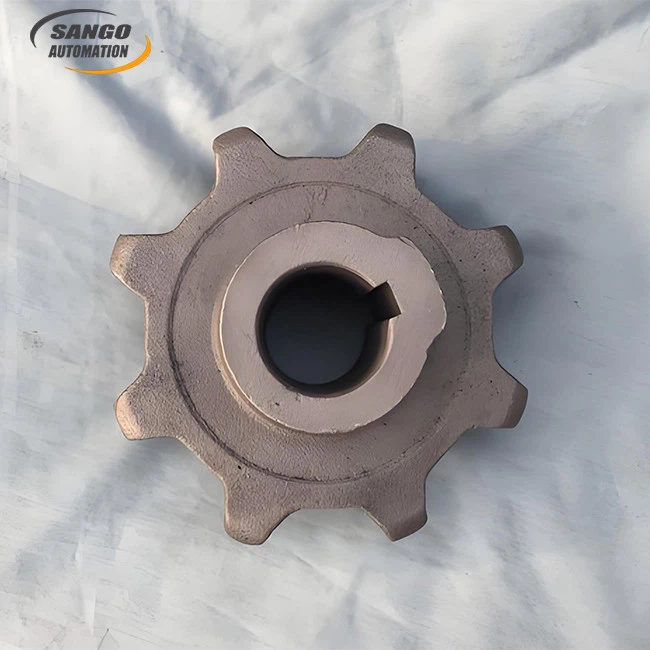
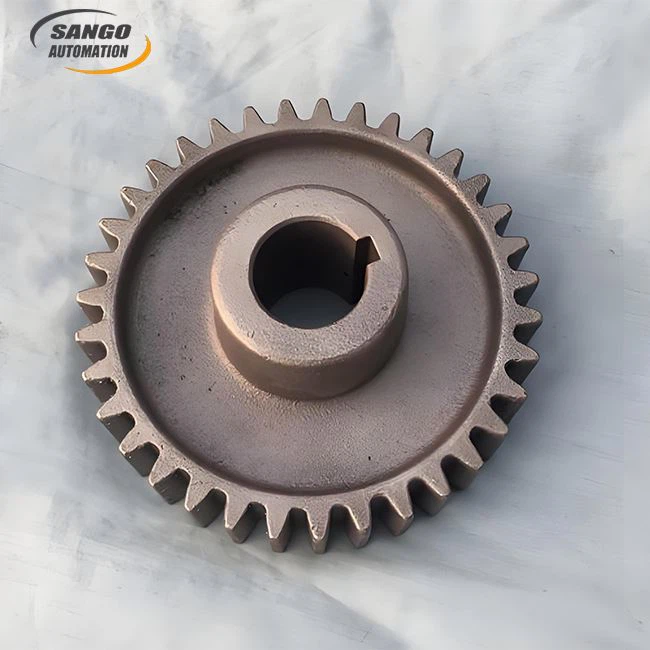
Cast iron gear has different characteristics depending on the cast iron material it chooses.
Good abrasion resistance
Due to the presence of graphite in the composition of cast iron materials, graphite is lubricating and forms a lubricating film during the friction of cast iron gear, thereby improving the wear resistance of the gear.
Good shock absorption
The graphite in cast iron materials can absorb mechanical vibration energy and hinder vibration propagation, so it can show good shock absorption performance in cast iron gear and reduce noise during operation.
Lower cost
The cost of cast iron materials is lower than that of stainless steel, copper alloys and other materials, and because it contains graphite, its cutting performance is also better, and the tool wear is small during processing, so it has lower material costs and processing costs.
Material Selection
The materials that can be selected for cast iron gear are gray cast iron, ductile iron, alloy cast iron, etc. The table below shows the characteristics and applications of gears made from different cast iron materials.
|
|
Gray cast iron
|
Ductile cast iron
|
Alloy cast iron
|
|
Peculiarity
|
Good shock absorption, wear resistance, processing performance and casting fluidity, but low strength, poor toughness, and impact resistance.
|
It has high hardness and toughness, comprehensive performance close to steel materials, and good shock absorption and wear resistance.
|
Gray cast iron or ductile iron is used as the base material, and other alloying elements are added to enhance the strength, hardness, wear resistance and heat resistance of the material.
|
|
Commonly Used Grades
|
HT250,HT300,etc.
|
QT200,QT400,etc.
|
nickel-chromium cast iron, chromium-molybdenum cast iron, etc.
|
|
Scenario
|
Suitable for low-speed, light-load, impact-free gears.
|
Suitable for medium to heavy loads with gears that can withstand some impact.
|
For special gears that require high wear resistance, corrosion resistance, or the ability to operate at higher temperatures.
|
|
|

|

|

|
Performance Parameters
When producing cast iron gear, the specific performance parameters can be determined according to the actual working conditions of customers, and the following is the main performance parameter table for your reference.
|
Parameter
|
Illustrate
|
|
Diameter Range
|
3 mm - 300 mm
Small diameter (<20mm): Ductile iron is often used.
Medium and large diameter: suitable for all types of cast iron, gray cast iron is mostly found in large low-speed gears.
|
|
Tooth Type
|
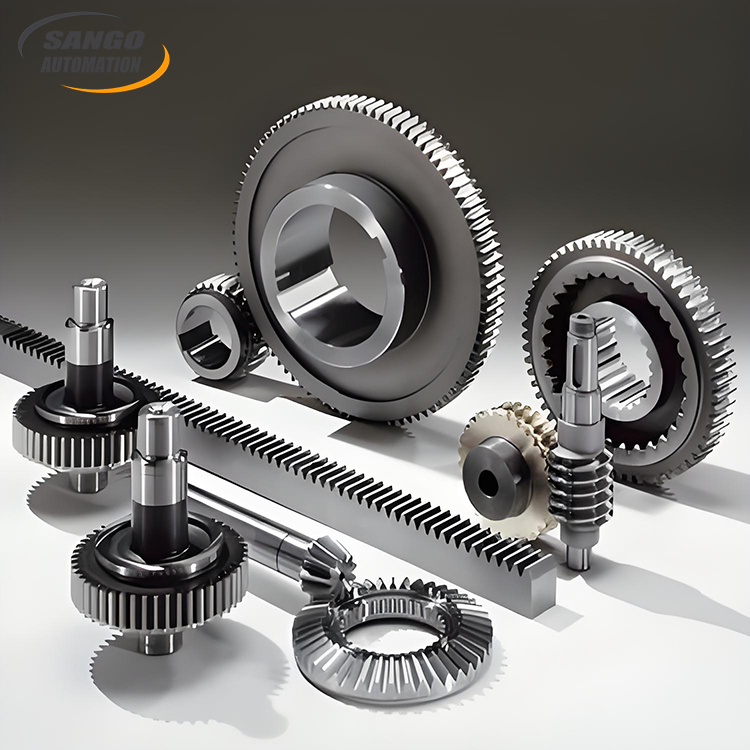
Straight teeth: the most common
Helical gear: smooth transmission, less noise, higher load carrying capacity
Bevel Teeth: Used for intersecting shaft drives, ductile iron is a common choice.
Internal gears: can achieve a compact structure, casting can form complex internal teeth well.
|
|
Modulus Range
|
0.1 mm 5.0 mm
|
|
Applicable Standards
|
ISO 1328, DIN 3962, GB/T 10095
|
|
Accuracy Level
|
ISO/DIN/GB level 6 (after finishing)
|
|
Tensile Strength
|
Gray iron150 - 350 MPa
Ductile iron400 - 800 MPa
|
|
Tooth Surface Hardness
|
Gray iron170 - 250 HB
Ductile iron: 170 - 300 HB (cast or normalized).
|
|
Surface Treatment
|
Phosphating treatment
Oxidation and blackening
Surface quenching
Galvanized/nickel
|
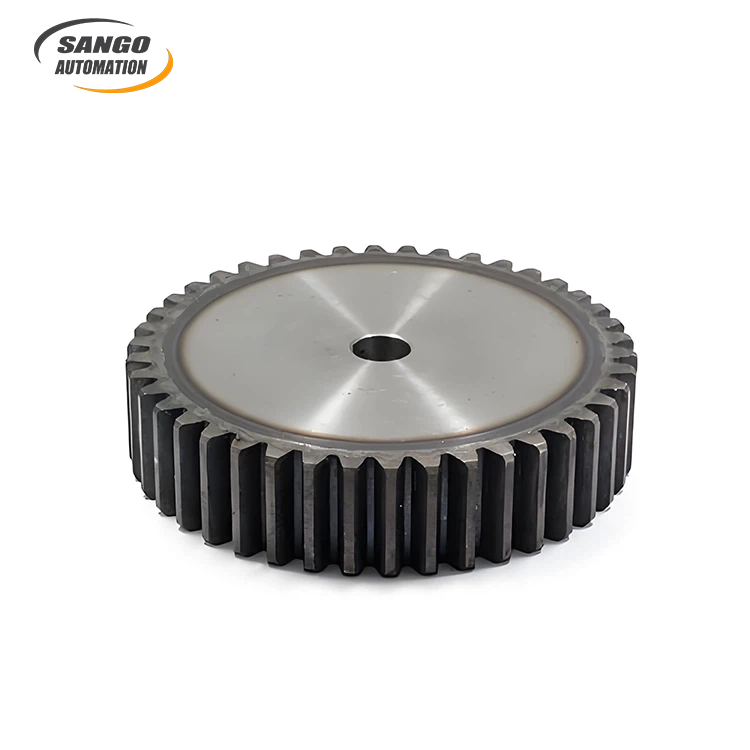
Precision and DurabilityOur cast iron spur gears are crafted to exact specifications using advanced hobbing processes, ensuring precise tooth profiles and smooth operation. The round, silver-finished gears are both durable and reliable, offering a hardness of 200-250 HB. This delivers optimal performance in demanding environments, maintaining efficiency and longevity even in continuous-use industrial settings.
Versatile ApplicationsDesigned for adaptability, these gears are widely used in industrial machinery, automotive transmissions, and agricultural equipment. The flexible design accommodates both clockwise and anti-clockwise rotation, making them suitable for various mechanical assemblies requiring consistent, high-output power and reliable torque transmission.
Customized SolutionsWe offer custom manufacturing to meet unique project needs. Whether you require specific gear sizes, tooth counts, power ratings, or specialized surface treatments, our team works closely with clients to deliver tailored solutions. Our gears handle input speeds up to 1500 RPM and can be optimized for variable output speed and torque as needed.
FAQ's of Cast Iron Gear:
Q: How is the surface finish achieved on these cast iron gears?
A: The smooth surface finish is accomplished through precision machining after the hobbing process, resulting in uniform, high-quality surfaces. Additionally, specialized surface treatments are applied to enhance corrosion resistance and aesthetic appeal.
Q: What customization options are available for the gear's diameter and number of teeth?
A: Customers can specify gear diameters anywhere between 50 mm and 500 mm, and the number of teeth is fully customizable according to your project's requirements, ensuring optimized gear performance for your specific application.
Q: When is this gear type most suitable for use?
A: These cast iron spur gears are best utilized in applications requiring reliable, high-output torque and efficiency-such as in industrial machinery, automotive gearboxes, and agricultural equipment-especially where both clockwise and anti-clockwise rotation is needed.
Q: Where are these gears commonly installed?
A: Our gears are widely implemented across industrial sectors, from heavy machinery manufacturing plants to automotive assembly lines and agricultural equipment workshops, both domestically in India and in export markets.
Q: What is the manufacturing process for these gears?
A: The gears are manufactured using precision hobbing, followed by machining to achieve the required surface smoothness. Post-machining, a corrosion-resistant treatment is applied to enhance durability and service life.
Q: How do I select the right module and gear size for my application?
A: Choosing the right module and size depends on your torque, speed, and gear ratio requirements. Our technical team provides guidance to ensure selections align precisely with load and performance specifications.
Q: What benefits do these cast iron gears offer compared to other materials?
A: Cast iron provides excellent strength, wear resistance, and vibration dampening, making it ideal for high-load, long-lasting applications. The added surface treatments ensure better corrosion resistance, contributing to a longer operational lifespan and dependable performance.

 Guangdong, China
 Send Email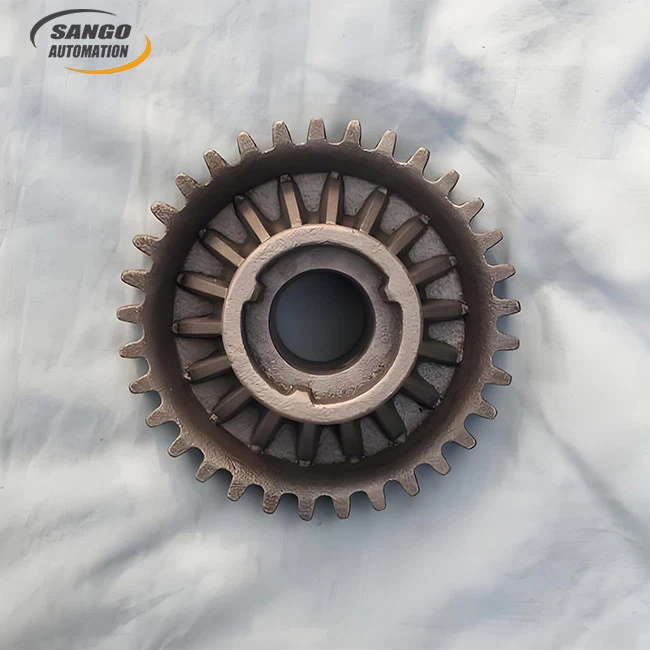

 Send Inquiry



 Send Inquiry


 English
 Spanish
 French
 German
 Italian
 Chinese (Simplified)
 Japanese
 Korean
 Arabic
 Portuguese