Precision Gearboxes For Servomotors About
What Are Precision Gearboxes for Servomotors?
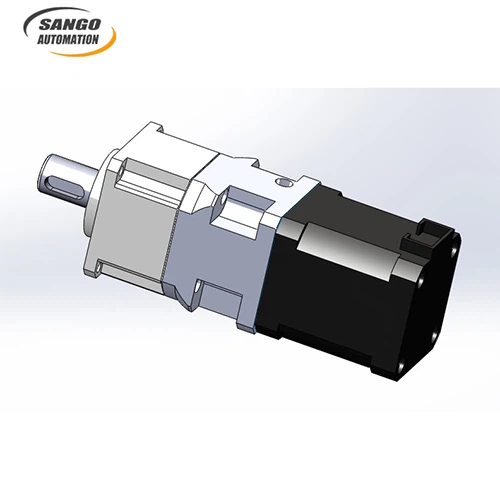
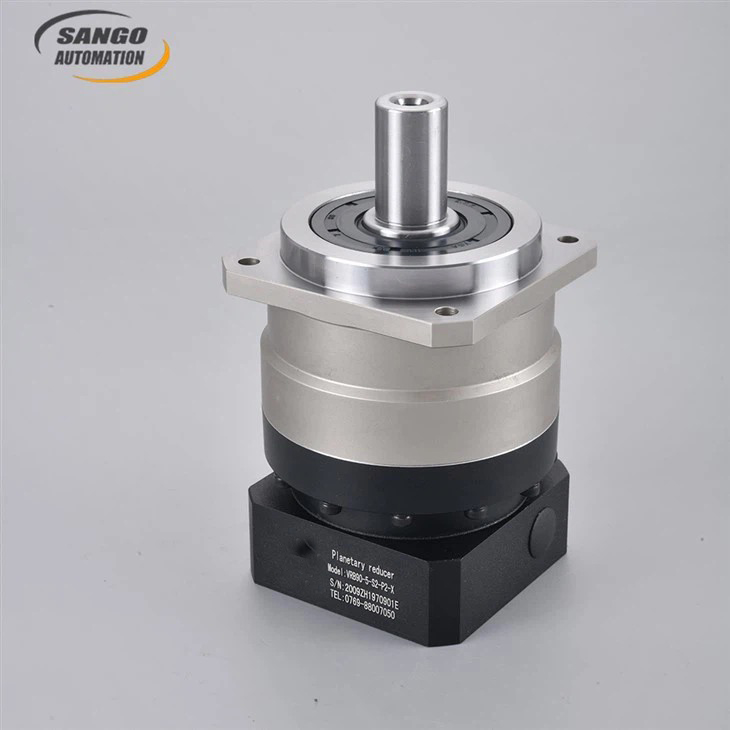
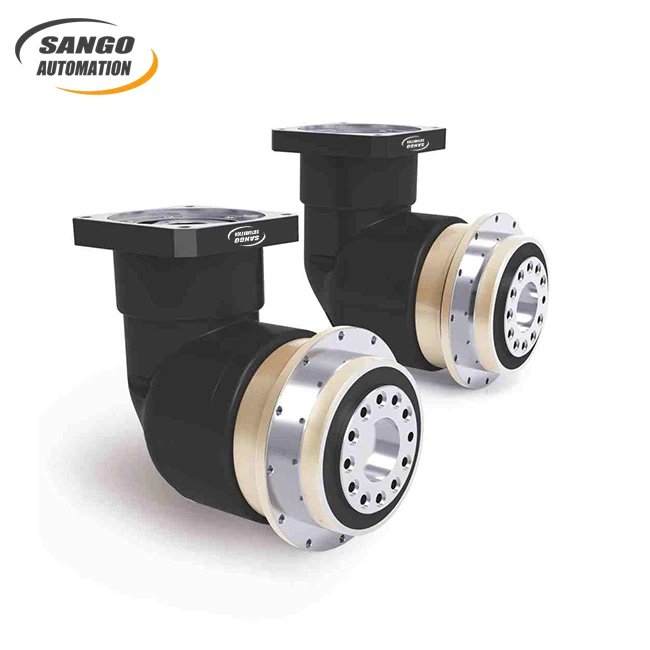
Precision gearboxes for servomotors are high-accuracy mechanical speed reducers specifically engineered to interface with AC/DC servo drives. Unlike standard industrial reducers, they deliver tightly controlled backlash , high torsional stiffness, and concentricity tolerances that enable closed-loop motion control systems to achieve repeatable, sub-millimeter positioning.
In CNC machine tools, collaborative robots, semiconductor pick-and-place systems, and medical imaging gantries, the servo gearbox is the critical link between electrical command and mechanical output. Poor gearbox selection results in positioning error, resonance, and premature wear.
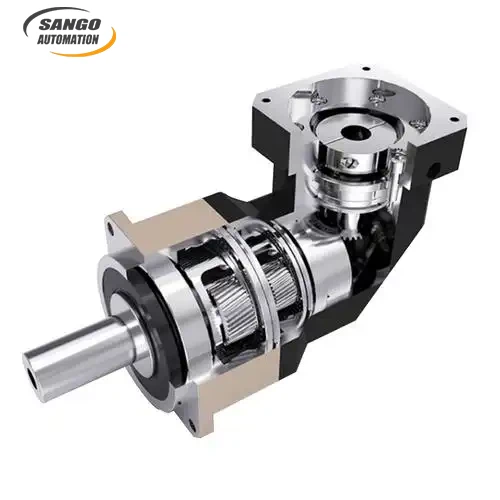
Sango manufactures precision gearboxes for servomotors across planetary, bevel-helical, and right-angle configurations , and supported by in-house non-standard design capability for applications where catalogue solutions fall short. With production lead times of 24 weeks and direct factory pricing, Sango delivers the technical rigour of servo gearboxes at a cost structure suited to volume OEM programmes.
Types of Servo Gearboxes And Key Technical Specifications
|
Gearbox Type
|
Backlash
|
Efficiency
|
Ratio Range
|
Best Application
|
Cost Tier
|
|
Planetary Gearbox
|
15 arcmin
|
9597%
|
3:1 100:1
|
CNC, robotics, linear axes
|
Mid
|
|
Harmonic Drive(Strain Wave)
|
Near-zero
|
8090%
|
50:1 320:1
|
Collaborative robots, medical
|
High
|
|
Helical Inline Gearbox
|
310 arcmin
|
9698%
|
5:1 400:1
|
Conveyor, packaging lines
|
LowMid
|
|
Bevel-Helical Gearbox
|
38 arcmin
|
9497%
|
5:1 200:1
|
Right-angle servo axes
|
Mid
|
|
Cycloidal Gearbox
|
1 arcmin
|
9095%
|
10:1 87:1
|
Heavy-duty servo indexing
|
High
|
|
Parameter
|
Definition
|
Typical Range
|
Impact if Misspecified
|
|
Output Torque
|
Maximum continuous torque at output shaft
|
5 50,000 Nm
|
Gearbox overload, fatigue failure
|
|
Backlash
|
Dead-band angle at output under zero load
|
1 10 arcmin
|
Positioning error, servo hunting
|
|
Torsional Stiffness
|
Output twist resistance under torque
|
5 1,000+ Nm/arcmin
|
Resonance, control instability
|
|
Reduction Ratio
|
Input-to-output speed ratio
|
3:1 320:1
|
Torque deficit or excess motor speed
|
|
Emergency Stop Torque
|
Peak torque during E-stop cycle
|
23 rated torque
|
Gear tooth fracture on sudden stop
|
|
Radial / Axial Load
|
Bearing capacity for external forces
|
App-specific
|
Premature bearing wear
|
Industry Applications
CNC Machine Tools
Rotary tables, spindle orientation, and multi-axis interpolation demand 3 arcmin planetary drives with high torsional stiffness.
Industrial Robotics
6-axis articulated arms require compact harmonic or planetary servo gearboxes at every joint for repeatable TCP positioning.
Semiconductor & SMT
Wafer handling and pick-and-place gantries use ultra-low-backlash servo gearboxes for micron-level placement accuracy.
Medical & Life Science
CT/MRI gantries, surgical robots, and infusion pumps rely on near-zero-backlash servo gearboxes for patient-safe motion profiles.
Packaging Automation
High-cycle indexing tables and servo-driven forming stations use helical-planetary gearboxes for throughput and durability.
AGV & Mobile Robotics
Drive-wheel servo gearboxes with high shock-load ratings enable precise navigation in warehouse automation fleets.
process
Selecting precision gearboxes for servomotors requires matching the mechanical interface, torque envelope, and dynamic response characteristics to the servo drive's control bandwidth. The following workflow is used by motion system engineers across automation.
1. Load Analysis; Calculate peak, RMS, and E-stop torque from load inertia and velocity profile.
2. Ratio Selection; Match motor base speed to required output RPM; optimize inertia ratio 10:1.
3. Backlash Requirement; Define allowable positioning error from system accuracy spec.
4. Mounting Interface; Confirm servo flange standard and output shaft type.
5. Life Calculation; Compute L10 bearing life from load, speed, and duty cycle.
6. Thermal Check; Verify thermal rating against ambient and continuous duty losses.
Pro tip
The optimal reflected inertia ratio for a servo system with a precision gearbox is between 1:1 and 5:1. Ratios above 10:1 cause sluggish response and overshoot; ratios below 0.5:1 waste motor torque capability.

 Guangdong, China
 Send Email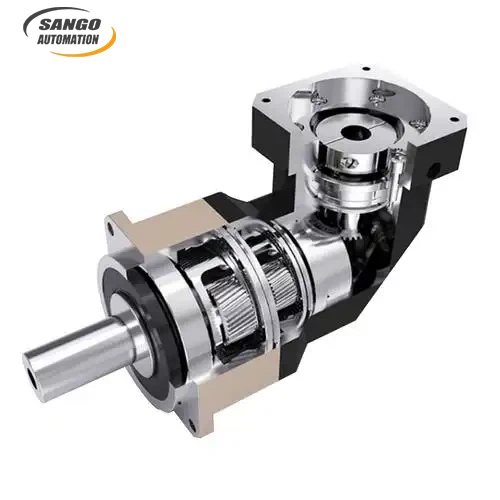

 Send Inquiry



 Send Inquiry


 English
 Spanish
 French
 German
 Italian
 Chinese (Simplified)
 Japanese
 Korean
 Arabic
 Portuguese