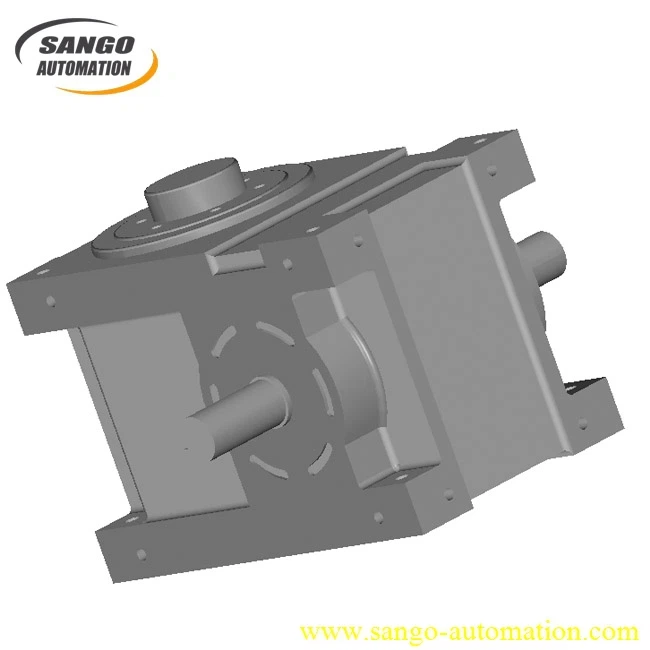
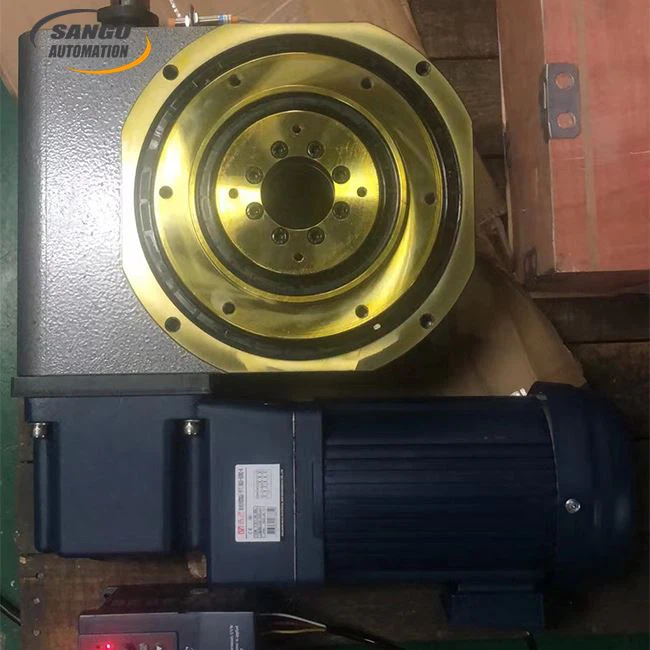
The core feature of our rotary positioning drives is to convert the continuous drive of the motor into an intermittent indexing motion of its output shaft, allowing the production process to proceed rhythmically.
Since the cam curve of the internal structure of the drive is optimized, the optimized cam curve can ensure the positioning accuracy of 30 arc sec15 arc sec when the cam and roller are engaged.
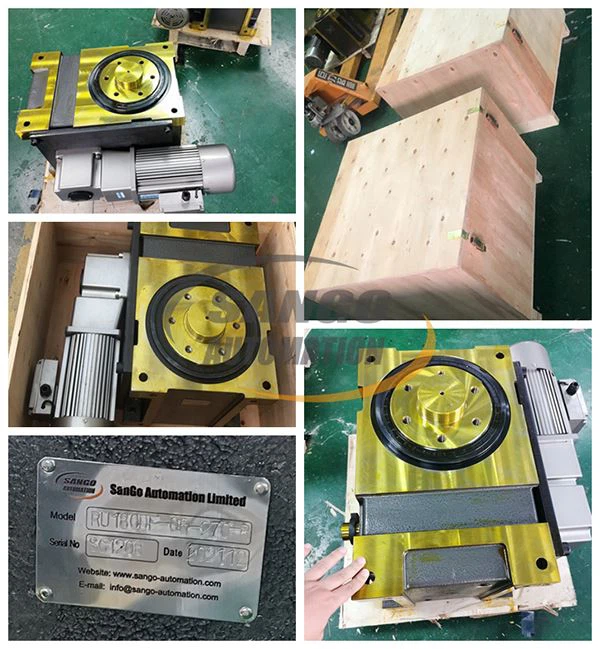
The mechanical structure of the rotary positioning drive is strong and durable, and the drive housing is made of gray cast iron HT250, which has good shock absorption and provides high reliability for the production line.
What is the expected service life of Sango's rotary positioning drives under frequent start-stop and high-load conditions?
Our rotary positioning drives are designed for demanding industrial environments. With cam rollers made of high-performance bearing steel GCr15 and carburizing hardened 20CrMnTi cams, the core components are extremely resistant to wear and fatigue. Operating properly and well lubricated at specified loads and speeds, our drives are designed to last over 20,000 hours, ensuring long-term stable operation of your production line and minimizing losses caused by downtime and replacement.
How do I choose the right rotary positioning driver model for my new device? What are the key parameters to consider?
Proper sizing is key to driving performance. We need to obtain the following parameters to help you choose the right model:
Turntable diameter vs. weight: This determines the required output torque.
Number of stations: That is, the number of times you need to index in a cycle.
Indexing to quiescent time ratio: This relates to the cadence and speed of the drive's operation.
Enter Speed: The motor speed you plan to match.
Mounting method: horizontal or vertical installation.
Our technical team can provide you with professional selection calculations and model recommendations based on these parameters you provide, ensuring that the driver is perfectly matched with your equipment.
In addition to the standard models, can non-standard customization be carried out according to the special space layout of our equipment?
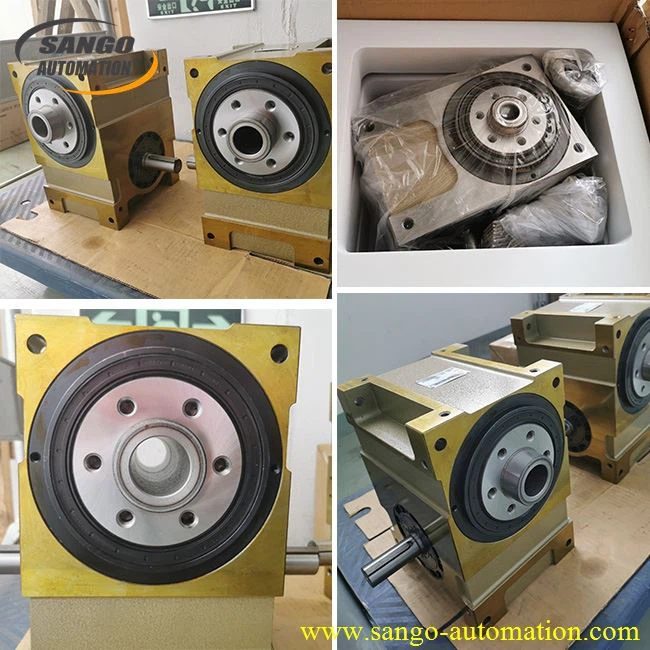
Of course. Sango Automation has extensive experience in non-standard customization. We understand that standard products sometimes don't meet all design needs. We can provide customized services including but not limited to special flange sizes, shaft bore structures, additional hollow through bore diameters, and specific mounting angles. Please provide your specific design solution or requirements, and we will discuss the possibility and optimal solution with you.
In order to ensure the long-term stability of the rotary positioning drive, what maintenance needs to be done on a daily basis?
Maintenance is very simple, and the core is lubrication. We recommend:
Regularly check and replace lubricating oil: New machines should change the lubricant after 500 hours of first operation, and then every 3,000 hours or annually.
Use the right lubricant: ISO VG220 or VG320 grade extreme pressure gear oil is recommended.
Sealing Inspection: Ensure that the oil seal at the output/input end is intact to prevent lubricating oil leakage and dust and moisture intrusion.
Proper maintenance can greatly extend the life of the drive and maintain its high-precision performance, and we provide detailed maintenance guides in the product manual.
What are the main advantages of using your cam rotary positioning drive compared to servo motor drive solutions?
Compared with the "servo motor + reducer" scheme, our cam splitter has three core advantages in the field of intermittent motion:
High rigidity and no cumulative error: The mechanical cam structure ensures that each index is based on the inherent cam curve, and the positioning accuracy is constant, and there will be no cumulative error due to long-term use.
Higher efficiency and stability: Pure mechanical transmission, without complex electronic control and feedback systems, is more stable and reliable in high-speed, high-frequency start-stop conditions, and has lower energy consumption.
Stronger overload resistance: The robust mechanical structure can withstand instantaneous impact loads, making it more suitable for working in heavy-duty environments.
In short, cam splitters are a more efficient, economical, and reliable choice for automated stations that require high-intensity, high-frequency, and high-precision intermittent indexing.

 Guangdong, China
 Send Email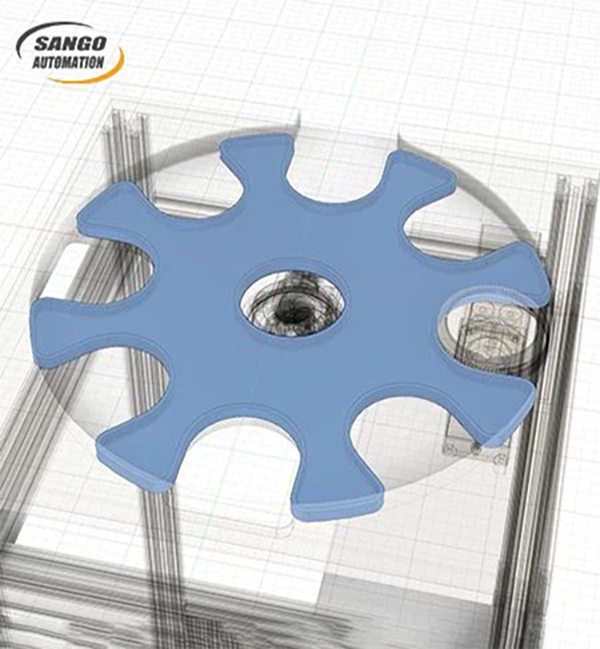

 Send Inquiry



 Send Inquiry


 English
 Spanish
 French
 German
 Italian
 Chinese (Simplified)
 Japanese
 Korean
 Arabic
 Portuguese