Aluminum Alloy Gear About
One-stop Custom Gear Factory
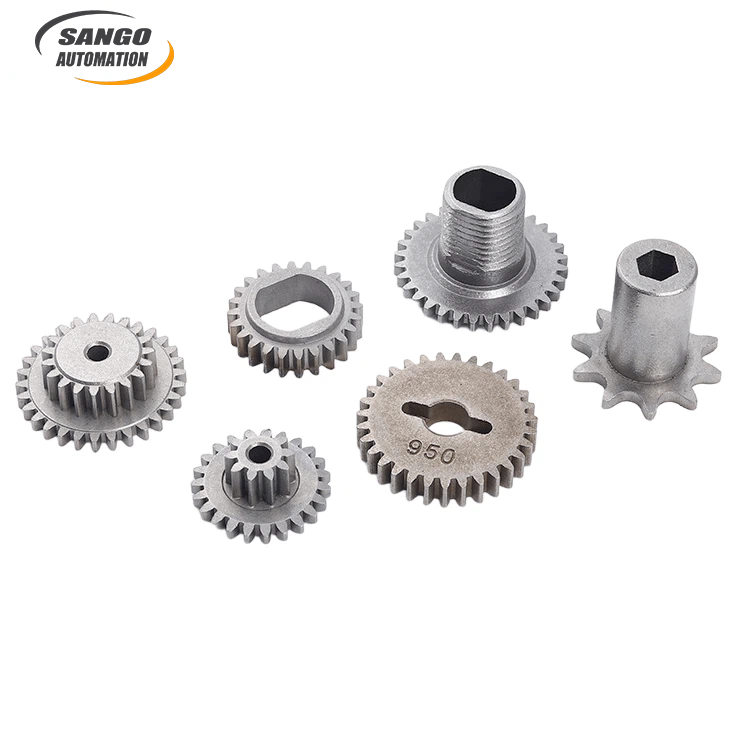
Sango Automation has been deeply involved in the field of gear manufacturing for more than ten years and now has rich experience in customization. We do not produce standard gears, but devote all our energy to the process of customizing gears for our customers.
At Sango, you can customize gear products in various materials, such as aluminum alloy gear, cast iron gear, nylon gear, etc.
Product Peculiarity
Lightweight
The density of aluminum alloy gear is about 1/3 of that of steel gears, so the overall weight and moment of inertia of the transmission system produced with aluminum gears are lower than those with steel gears, making them used in scenarios that require high-speed start-stop and quick response (robots, automation equipment, etc.).
Corrosion resistance
Aluminum alloy will form a dense oxide film on the surface of the material under natural conditions, this oxide film has a certain ability to resist atmospheric and chemical media corrosion, if the customer's working conditions require higher corrosion resistance, it can also be achieved through anodizing and other surface treatments.
Thermal conductivity
Aluminum alloy gears have good thermal conductivity, which can effectively conduct and dissipate the heat generated during the gear meshing process, helping to reduce the operating temperature of the entire transmission system.
Ease of processing
Aluminum alloy has excellent cutting performance, low cutting force, and slow tool wear. This makes it easy to efficiently manufacture high-precision gears with complex shapes through CNC and other processes, which has a significant cost advantage when producing large quantities.
Material Selection
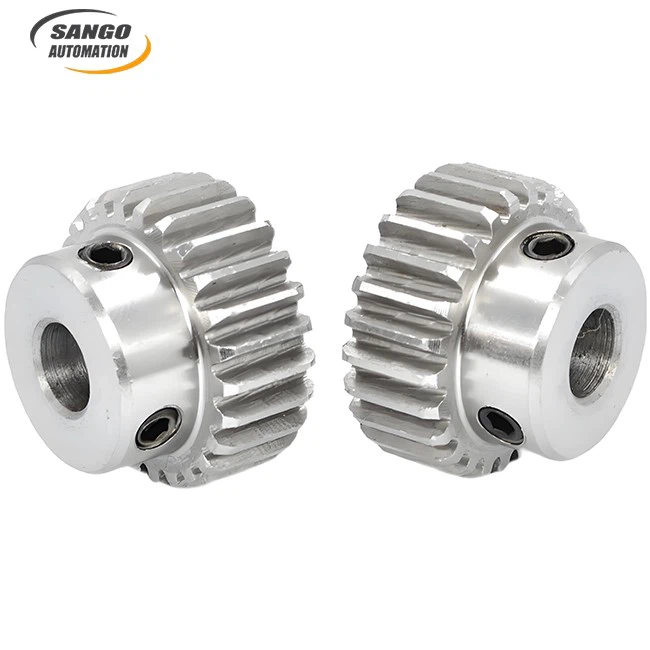
The aluminum material chosen for aluminum alloy gear directly affects the performance of the gear produced. The aluminum alloy used to make gears is not ordinary aluminum, but forged aluminum alloy with high strength, the most commonly used are aluminum alloy 2011, aluminum alloy 6061, and aluminum alloy 7075.
|
|
Aluminum Alloy 2011
|
Aluminum alloy 6061
|
Aluminum alloy 7075
|
|
Peculiarity
|
Good cutting performance, high surface finish of processed products, easy chip breakage.
|
Corrosion resistance, good weldability and medium strength, good processing performance.
|
High strength, performance close to steel.
|
|
Applicable Scenarios
|
It is suitable for producing gears that require high dimensional accuracy and surface finish, but do not require high loads.
|
Suitable for general purpose industrial gears with medium loads, potentially corrosive working environments, or where surface treatment is required.
|
It is used to manufacture gears that are subjected to high loads and stresses.
|
|
Notes:
|
Corrosion resistance is relatively poor.
|
|
Its corrosion resistance is average and needs to be treated with a surface.
|
Aluminum Alloy Gear Processing Equipment
There are many equipment used to produce aluminum alloy gears, such as Kashifuji Gear skiving machine KPS30, Ningjiang CNC horizontal gear hobbing machine YK3610IV., Richuang CNC high-speed horizontal gear hobbing machine YKS3612III., etc.
|
Parameter
|
Kashifuji Gear Skiving Machine KPS30
|
Ningjiang CNC Horizontal Gear Hobbing Machine YK3610
|
Richuang CNC High-Speed Horizontal Gear Hobbing Machine YKS3612III
|
|
Maximum Workpiece Diameter
|
30 mm
|
120 mm
|
100 mm
|
|
Maximum Modulus
|
1.0 mm
|
2.0 mm
|
1.5 mm
|
|
Maximum Spindle Speed
|
5,000 rpm
|
2,000 rpm
|
1,500 rpm
|
|
Machining Accuracy
|
DIN Class 5
|
DIN Class 6-7
|
DIN Class 7-8
|
|
Peculiarity
|
This machine enables complete machining of internal gears, double gears, and various others in a single clamping.
|
High rotation speed, suitable for efficient finishing of small and medium-sized gears.
|
It is suitable for gear manufacturing in automotive, motorcycle, general machinery and other industries.
|
| Image |

|

|

|
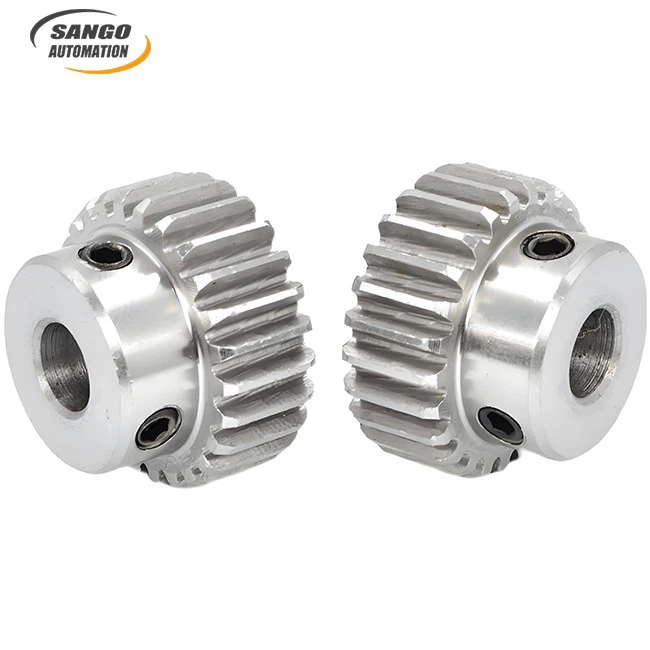
Superior Corrosion Resistance and FinishWith advanced anodized or polished surface treatments, our aluminum alloy gears guarantee outstanding resistance to corrosion, making them ideal for demanding environments. The protective coating also enhances the aesthetic appeal, ensuring both functional and visual longevity, particularly useful in machinery and automotive applications.
Engineered for High PerformanceThese gears are precision-hobbed and meet stringent DIN and ISO standards, ensuring consistent performance, low noise, and smooth operation. Their high strength-to-weight ratio and efficiency of up to 98% allow for reliable power transmission in parallel gearing arrangements, suitable for a wide range of industrial uses.
FAQ's of Aluminum Alloy Gear:
Q: How is the surface of the aluminum alloy gear treated for durability?
A: The gears are finished with either anodized or polished surface treatments. Anodizing enhances corrosion resistance and hardness, while polishing provides a smooth, visually appealing finish, making the gears suitable for demanding environments.
Q: What is the typical process used for manufacturing these gears?
A: Production of these aluminum alloy spur gears involves precision hobbing, ensuring high accuracy in tooth profiles and consistent quality across batches in compliance with DIN and ISO standards.
Q: Where can these gears be applied, and in what industries are they typically used?
A: These gears are widely utilized in automotive systems, various machinery, and robotics. Their durability, high efficiency, and low noise characteristics make them suitable for automated equipment, drive systems, and precision transport mechanisms.
Q: What advantages does aluminum alloy provide compared to conventional steel gears?
A: Aluminum alloy gears are significantly lighter, provide excellent corrosion resistance, and maintain a high strength-to-weight ratio. This results in improved energy efficiency and reduced wear, especially in dynamic or high-speed applications.
Q: When is it recommended to use spur gears with modules between 1 and 8 mod and 12-120 teeth?
A: These specifications are recommended when medium- to high-precision gear transmission is required for moderate loads and speeds, common in robotics, machinery, and automotive systems where compactness and smooth operation are essential.
Q: How does the gear maintain low noise and high efficiency during operation?
A: The precision hobbing process, combined with careful material selection and strict adherence to standards, ensures tight tolerances and optimal gear tooth engagement, leading to minimized vibration, low operational noise, and efficiencies up to 98%.

 Guangdong, China
 Send Email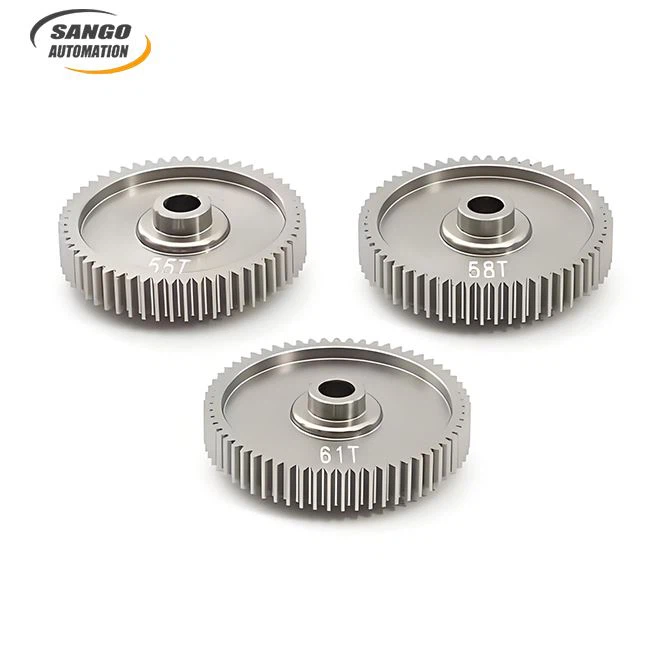

 Send Inquiry



 Send Inquiry


 English
 Spanish
 French
 German
 Italian
 Chinese (Simplified)
 Japanese
 Korean
 Arabic
 Portuguese