Iron Alloy Gear About
Feature
Good wear resistance
The addition of alloying elements enhances the wear resistance of the gear surface, it reduces the risk of wear and pitting for tooth surface and prolongs service life of the gears. It performs particularly well especially in environments of long-term operation or high-friction.
Excellent fatigue performance
The iron alloy gear has relatively high fatigue strength. It can resist fatigue damage under repeated stress. The stable operation under frequent start-stop, speed change and other working conditions could be ensured, it can reduce fault probability.
Adjustable heat treatment performance
The performance of iron alloy gear can be further optimized through different heat treatment processes (such as quenching and tempering, carburizing, nitriding, etc.). For example, carburizing treatment can make the surface of gear form a carburizing layer of high hardness, meanwhile maintaining the toughness of the heart. It takes into account wear resistance and impact resistance.
Dimensional stability
During the casting or forging process, the iron alloy gear has relatively good homogeneity of structure and the change of its size is small after heat treatment, so the accuracy of gears and the stability of transmission can be ensured. Iron alloy gear is suitable for transmission systems with high precision requirements.
Corrosion resistance (for some alloys)
Some iron alloy gears (such as stainless-steel gears) have certain corrosion resistance. They can be used in the environments of damp and corrosive medium and reduce gear damage caused by corrosion.
Cost-effectiveness
Compared with some high-performance materials (such as non-ferrous alloys), the cost of iron alloys is relatively low. Moreover, its production process is mature and has a high cost-performance ratio during mass production. Iron alloy gear is widely applied in various industrial fields.
Comparison of mainstream process flows
|
Stage
|
Powder metallurgy process (recommended)
|
Traditional cutting processing method
|
|
raw materials preparation
|
Mix iron powder + alloy powder + lubricant
|
Forging/casting blanks
|
|
Forming method
|
Mold pressing (one-time forming of tooth profile)
|
Turning hobbing/shaping/shaving
|
|
Heat treatment
|
Sintering + optional carburizing and quenching
|
Normalizing carburizing and quenching tempering
|
|
Finishing
|
Generally, no processing is required; for high precision, need gear honing
|
Fine processing such as gear grinding and lapping
|
|
Production efficiency
|
High, suitable for mass production
|
relatively low, involves many procedures and takes a long time
|
|
Material utilization rate
|
Over 95%, almost no waste
|
40-70%, generating a large amount of chips
|
Common types
Carbon steel gear
Carbon is the main alloying element, It is divided into low-carbon steel, medium-carbon steel and high-carbon steel gears.
Low-carbon steel gear: Low cost and good processing performance, it is often used in light-load and low-speed applications
Medium carbon steel gear: The comprehensive performance is good after quenching and tempering treatment, it is suitable for transmission with medium loads and rotational speeds.
High carbon steel gear:It has high hardness and good wear resistance, but relatively poor toughness. It is used for light-load gears with extremely high wear resistance requirements.
Alloy steel gear
Adding alloying elements such as manganese, chromium, nickel and molybdenum, it has higher strength, hardness, toughness and heat resistance. It is often used in harsh working conditions such as heavy load, high speed and high temperature, for gears in fields like automotive transmissions, construction machinery and mining machinery.
stainless steel gear
Stainless steel gear contains elements such as chromium and nickel. It has excellent corrosion resistance and oxidation resistance. Stainless steel gear is suitable for damp, corrosive environments or occasions with high hygiene requirements, such as food processing, chemical engineering, Marine engineering and other fields.
Accuracy level: ISO/DIN/GB level 5
module: 0.1-5.0
Tooth tip dia: 3mm-300mm
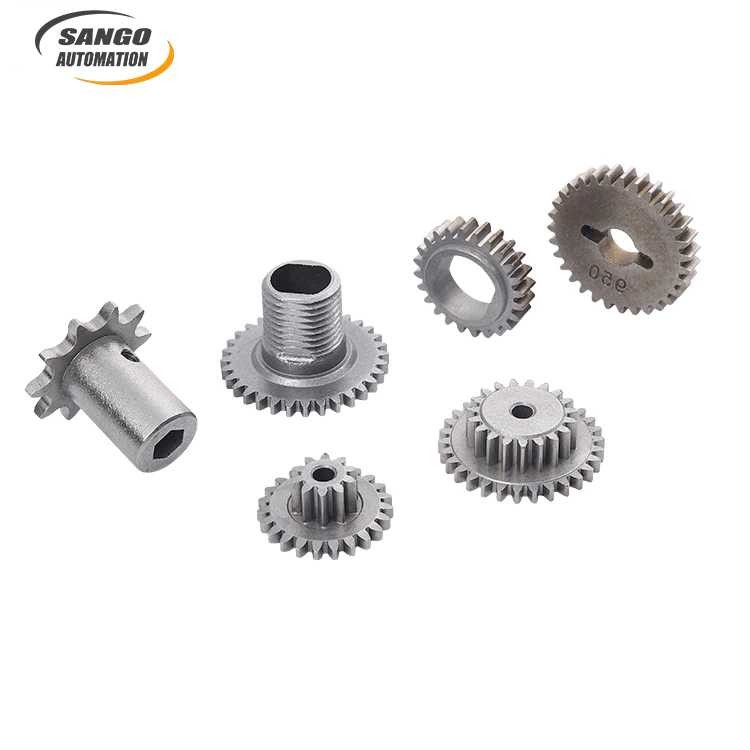
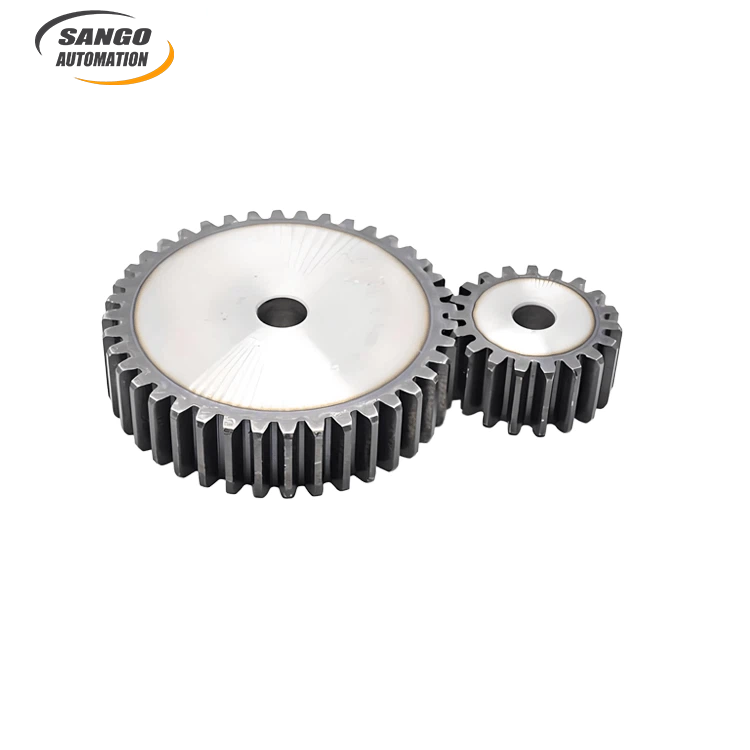
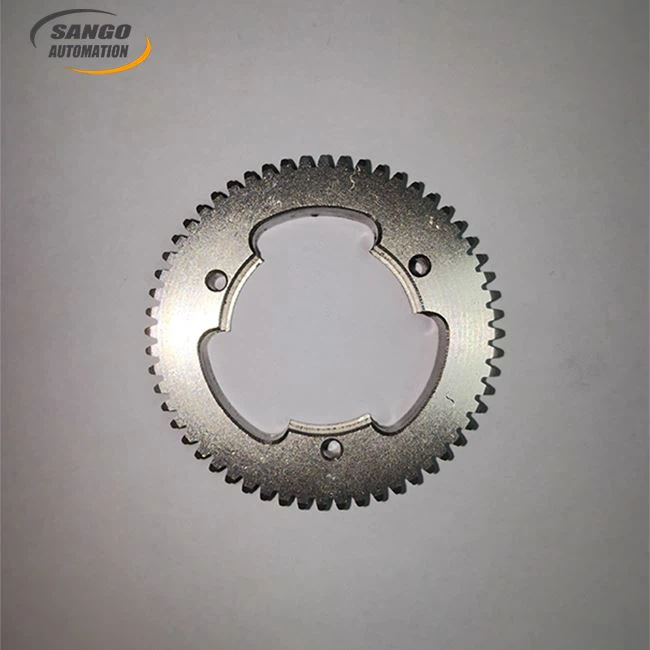
Engineered for Industrial EfficiencyDesigned with precision and built using premium iron alloy, our gears are a preferred choice for demanding industrial environments. Their standardized sizing simplifies integration into existing machinery, making them a versatile solution for various engineering applications. Each product is inspected for quality to ensure flawless operation and optimal performance.
Unmatched Durability and ReliabilityManufactured using high-grade iron and advanced techniques, our Iron Alloy Gears are engineered to resist wear and tear. Their superior strength supports uninterrupted operations, even under continuous industrial stress. The silver finish not only enhances their appearance but also adds a protective layer against corrosion.
FAQ's of Iron Alloy Gear:
Q: How are the Iron Alloy Gears used in industrial applications?
A: Iron Alloy Gears serve as crucial components in numerous industrial machines, transmitting power and motion with high efficiency. Their standard sizes make them compatible with various mechanical systems, ensuring smooth, reliable operation in demanding industrial settings.
Q: What is the manufacturing process for your Iron Alloy Gear?
A: Our Iron Alloy Gears are produced using advanced casting and machining techniques, followed by rigorous finishing and quality checks. This process guarantees precise dimensions, consistent performance, and a durable finish suited for industrial use.
Q: When should I replace gears in my industrial equipment?
A: Gears should be inspected regularly for signs of wear, noise, or reduced performance. Replacement is recommended if significant wear, pitting, or misalignment is noticed, ensuring continued operational efficiency and safety.
Q: Where can I purchase or inquire about your Iron Alloy Gears in India?
A: You can contact us directly as we are a leading distributor, exporter, manufacturer, supplier, and trader based in India. Reach out by phone, email, or through our official website to place orders or request additional information.
Q: What are the key benefits of choosing your Iron Alloy Gear?
A: Our Iron Alloy Gears offer outstanding strength, wear-resistance, and compatibility with standard machinery. Clients benefit from their long service life, corrosion-resistant finish, and the convenience of readily available standard sizes.
Q: How does the silver color of the gear provide added value?
A: The silver color indicates a specialized finish that not only improves the gear's appearance but also enhances its resistance to rust and surface degradation, contributing to its long-term reliability in industrial environments.

 Guangdong, China
 Send Email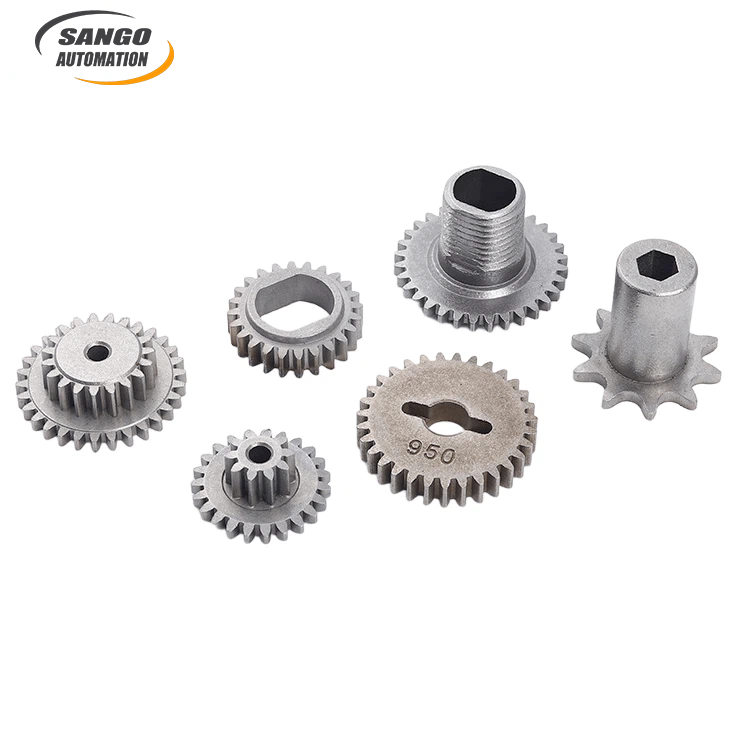

 Send Inquiry



 Send Inquiry


 English
 Spanish
 French
 German
 Italian
 Chinese (Simplified)
 Japanese
 Korean
 Arabic
 Portuguese