CNC Milling Service About
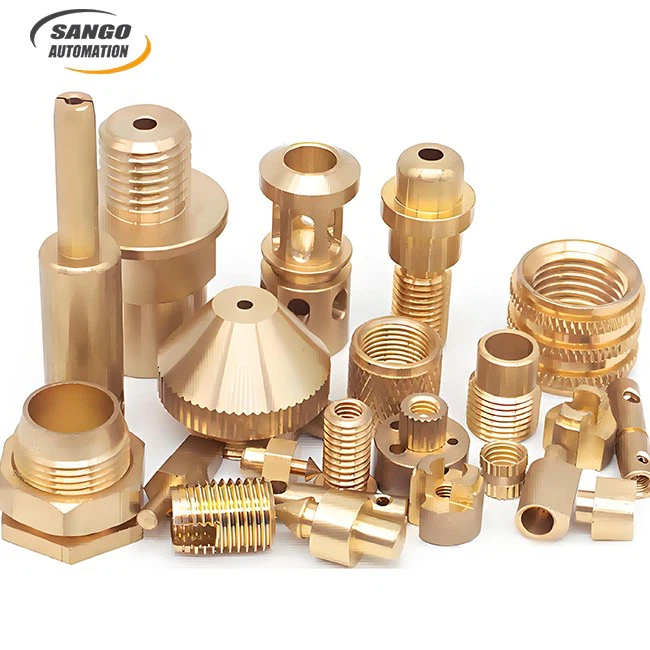
Sango Automation Limited is one of the most reliable manufacturers and suppliers of cnc milling service in China. With abundant experience, we warmly welcome you to wholesale advanced cnc milling service made in China here from our factory. Good service and quality products are available.
The Sango Automation team has been working on CNC milling since 2015 and has accumulated ten years of experience in custom production. At present, we have used CNC milling services to help our customers' high-precision equipment, providing spare parts with an accuracy tolerance of 0.003mm for our customers' equipment.
Key Differences Between 3-, 4-, and 5-Axis Milling
To meet diverse CNC machining needs, we are equipped with comprehensive milling capabilities. Commonly used CNC milling is divided into three types according to the number of axes, namely 3-axis, 4-axis and 5-axis milling.
3-axis milling
Only three axes move in three linear directions: the X axis (left and right), the Y axis (forward and backward), and the Z axis (up and down).
Peculiarity
Easy to operate and program.
It is suitable for heavy cutting, such as face milling, cavity roughing, etc.
Efficiency and precision are high when machining planes and holes parallel to the spindle.
4-axis milling
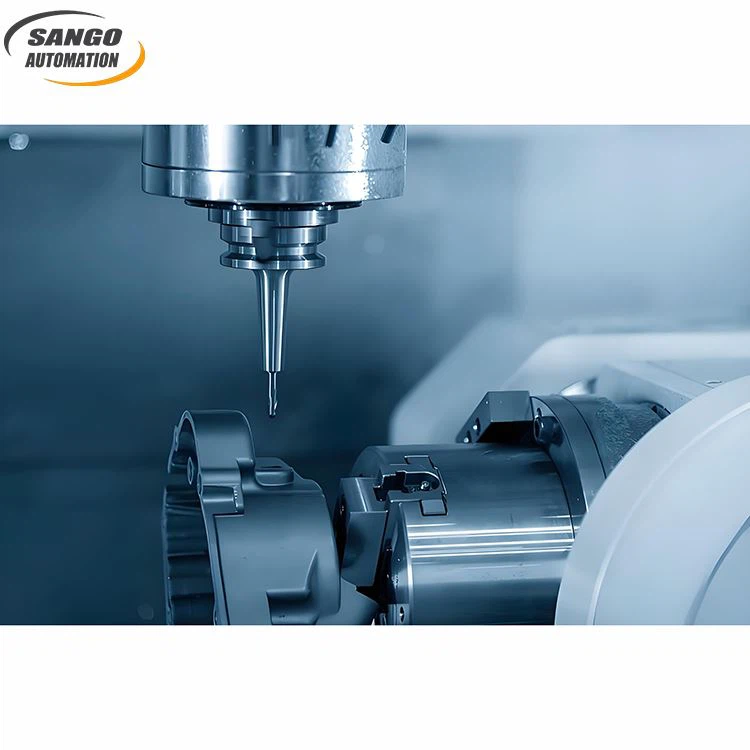
Moves in three linear directions like the 3-axis, but adds an axis of rotation (usually around the X-axis) called the A-axis.
Peculiarity
It reduces the number of clamping times required for workpiece processing and reduces the cumulative error.
It can realize the processing of some complex features.
5-axis milling
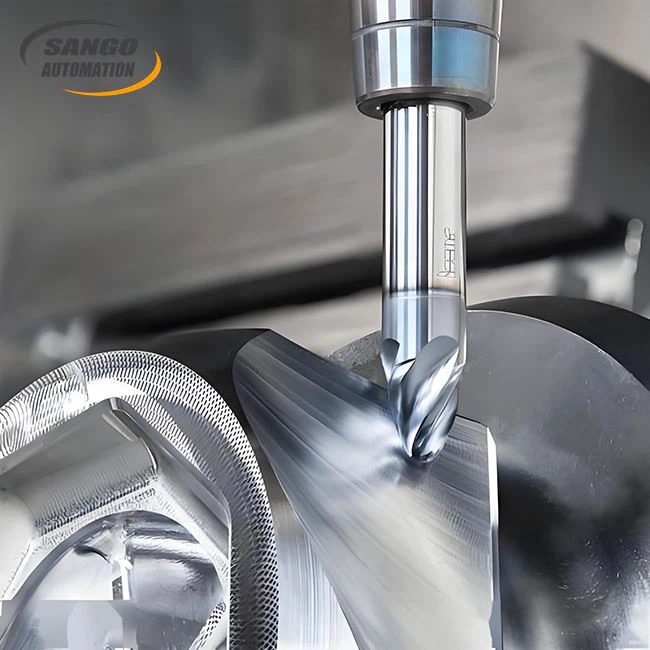
In addition to linear motion in the X, Y, and Z axes, two rotary axes, A and B (or C) axes, are added, enabling simultaneous movement of the five axes.
Peculiarity
The entire machining operation of the workpiece can be completed in one clamping.
The machining accuracy tolerance can reach 0.003mm.
The tool axis orientation can be dynamically adjusted to maintain the optimal cutting angle.
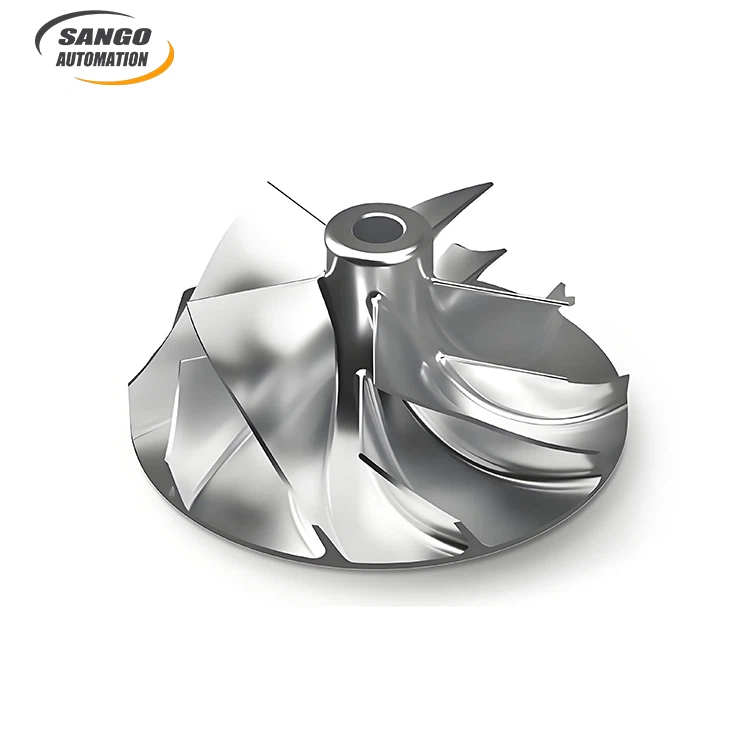
It has strong machining ability for complex surfaces, and can complete the processing of complex three-dimensional free-form surfaces such as impellers and turbines at one time.
CNC Milling Materials
Our CNC milling services support the processing of many types of materials, with more than 50 common grades of materials, including three main categories of materials, such as metallic materials, plastic materials, and composite materials.
Table 1 Metal material table
|
Metallic Materials
|
|
Material
|
Grade
|
Illustrate
|
|
Copper alloy
|
Copper alloy C36000, etc
|
It is easy to cut and has good corrosion resistance and is used to machine into gears and valve bodies.
|
|
Aluminum alloy
|
Aluminum 6061, 7075, 5052, etc
|
Lightweight, strong, and corrosion resistant are often used to make prototypes.
|
|
Stainless steel
|
Stainless steel 303, 304, 316, etc
|
Stainless steel 303 has good cutting properties but average corrosion resistance. Stainless steel 304 and 316 have good corrosion resistance, but are more difficult to process than 303.
|
|
Alloy steel
|
Alloy steel 4010, 4340, 1215, etc
|
It has high strength and wear resistance, making it suitable for camshafts, knives, and other scenarios that require high wear resistance.
|
|
Titanium alloy
|
Ti-6Al-4V, etc
|
Milling is more difficult than other materials, but it has the best performance and is often used in aerospace parts.
|
Table 2 Plastic material table
|
Plastic Material
|
|
Material
|
Illustrate
|
|
POM
|
The mechanical properties are close to metal materials, and they are easy to process, and are often used in the production of gears, bearings, and other parts.
|
|
ABS
|
It has impact resistance and is easy to post-process, and is widely used in product prototypes and shell machined parts.
|
|
Nylon
|
Nylon material has a low coefficient of friction, but it is necessary to consider the change in product size caused by its moisture absorption when processing it into products.
|
|
PC
|
It has good impact resistance and rigidity, but it will "stick to the knife" during machining, and a sharp tool is needed to prevent burrs.
|
|
PMMA
|
High transparency, good weather resistance, light weight, but large brittleness, the parameters need to be controlled during processing to prevent the material from overheating and melting or crumbling.
|
Table 3 Composite material table
|
Composites Material
|
|
Material
|
Illustrate
|
|
PTFE+Carbon Fiber
|
Carbon fiber acts as a filler, which improves the wear resistance and mechanical strength of PTFE material.
|
|
Silicon carbide fiber + aluminum alloy
|
It is a high-performance metal matrix composite with extremely high specific stiffness and heat resistance.
|
CNC Milling VS CNC Turning
Key Aspects of CNC Milling
The workpiece is fixed on the worktable and subtractive manufacturing is done by the rotation of the cutting tool.
Raw materials can be flat slabs, squares, and irregularly shaped blank materials.
With multi-axis linkage configurations such as 3 axis and 5 axis, milling of various types of parts can be realized.
It can be used to produce molds, jigs, gears, and other components with complex shapes.
Key Aspects of CNC Turning
The workpiece is clamped and rotated on the spindle, and subtractive manufacturing is completed by the feed of the tool.
It is used to process rotary body parts, and the shape is generally cylindrical, conical and spherical.
Turning produces products with high precision and high symmetry.
The main products produced are shafts, valves, bushings and other parts with symmetrical rotation.
Simplified Custom CNC Manufacturing
Our Streamlined 4-Step Process
Submit Your Design: Upload your 2D drawings(.pdf, etc.) and CAD files (.STEP, .IGS, etc.) and specify materials, quantity, and required tolerances.
Engineering Review: Within 24 hours, our engineers provide a detailed quote and free DFM feedback.
Precision Manufacturing: Once approved, your project enters our rigorous production and quality control workflow.
Inspection & Delivery: Parts are 100% inspected (CMM report included) and securely shipped to you, anywhere in the world.
Precision Engineering for Diverse ApplicationsOur CNC milling machines are ideal for custom precision parts across a range of industries, including aerospace, electronics, and automotive. Enjoy machining tolerances up to 0.005 mm, a premium surface finish of Ra 0.4m, and batch or prototype flexibility. From initial drawing to finished product, our service is optimized for high accuracy and reliable repeatability.
Flexible Capabilities and Software CompatibilitySupporting 3, 4, and 5-axis CNC machining, we accommodate workpieces up to 1500 x 800 x 600 mm and a variety of toolholders and spindle tapers (ISO, HSK, BT, CAT). Our CNC service is compatible with G-code, CAD/CAM imports, and accepts popular formats like STEP, IGES, STL, DXF, and DWG, ensuring seamless integration into your workflow.
Comprehensive Service and SupportEvery order includes on-site installation, operator training, and ongoing online technical support. With integrated safety features-emergency stops, overload protection, and door interlocks-your safety is as important as your project quality. Expect lead times as fast as 3-7 days for prototypes and tailored solutions based on your CAD models or drawings.
FAQ's of CNC Milling Service:
Q: How can I submit my design files for CNC milling services?
A: You can submit your designs in various supported formats, including STEP, IGES, STL, DXF, DWG, or CAM files. We provide flexible CAD/CAM import options and work closely with you to ensure compatibility and optimal machining results.
Q: What is the maximum workpiece size and load capacity that your CNC milling machines can handle?
A: Our milling machines can accommodate workpieces up to 1500 x 800 x 600 mm, with a maximum load capacity of up to 2000 kg. These specifications vary depending on the specific machine configuration you require.
Q: What materials can be machined with your CNC milling service?
A: We specialize in machining a broad range of materials, such as aluminum, stainless steel, brass, copper, and various plastics including ABS, POM, and PTFE. If you have unique material requirements, we offer tailored solutions to meet your needs.
Q: What is the usual lead time for prototyping and batch orders?
A: For prototyping, the typical lead time is 3-7 days. Batch orders can be completed within 7-21 days, depending on order volume, complexity, and customization requirements.
Q: How do you ensure the precision and repeatability of machined parts?
A: Our machines are engineered for high-performance operations, achieving machining tolerances of 0.005 mm and repeatability up to 0.002 mm. This is accomplished through robust servo and stepper motor drives, advanced industrial CNC controllers, and quality control protocols.
Q: What safety features are integrated into your CNC milling services?
A: We prioritize workplace safety with features like emergency stop buttons, overload protection, and door interlocks. Each machine is also designed with IP54 or IP55-rated enclosures and sensors to enhance operational safety during machining processes.
Q: Can you assist with installation, training, and ongoing technical support?
A: Absolutely. We provide on-site installation and comprehensive operator training with every order. Additionally, our customers benefit from ongoing online technical support to ensure seamless operation and quick issue resolution.

 Guangdong, China
 Send Email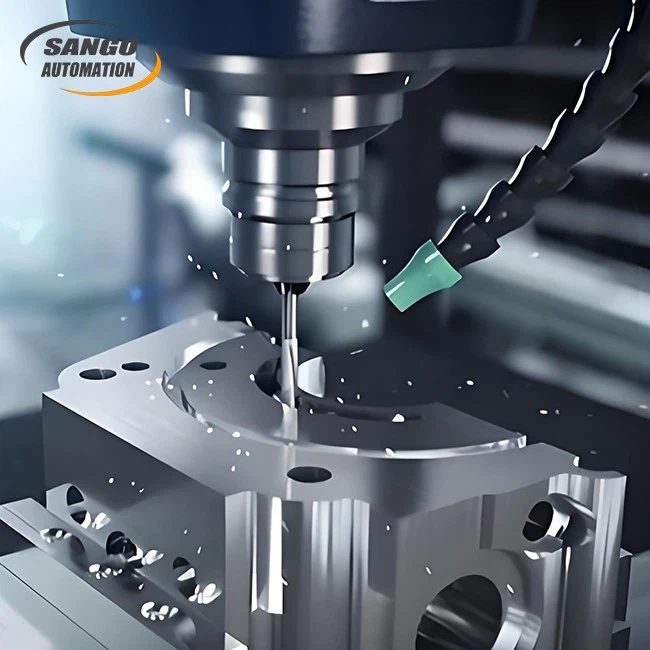

 Send Inquiry



 Send Inquiry


 English
 Spanish
 French
 German
 Italian
 Chinese (Simplified)
 Japanese
 Korean
 Arabic
 Portuguese