Fixed Rotary Index Table About
Sango Automation is a professional precision reducer factory, capable of providing different types of reducers for your equipment, including fixed rotary index table and flexible rotary index table, etc., to empower your precision machinery with high index accuracy (accuracy 15 arc sec).
Choose us for reliable drive cores for your precision equipment.
Product Features
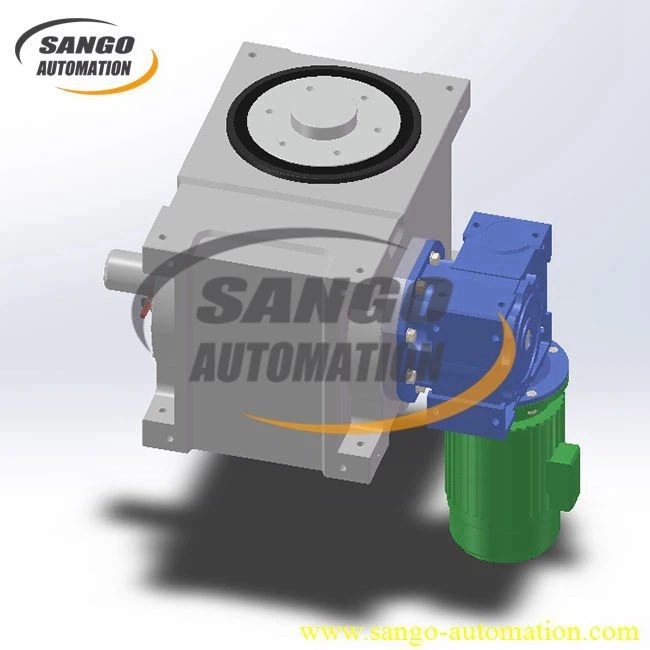
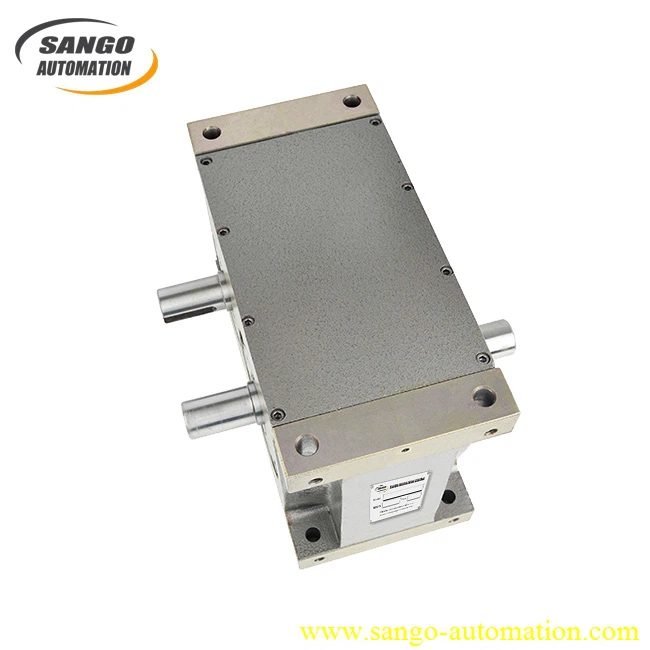
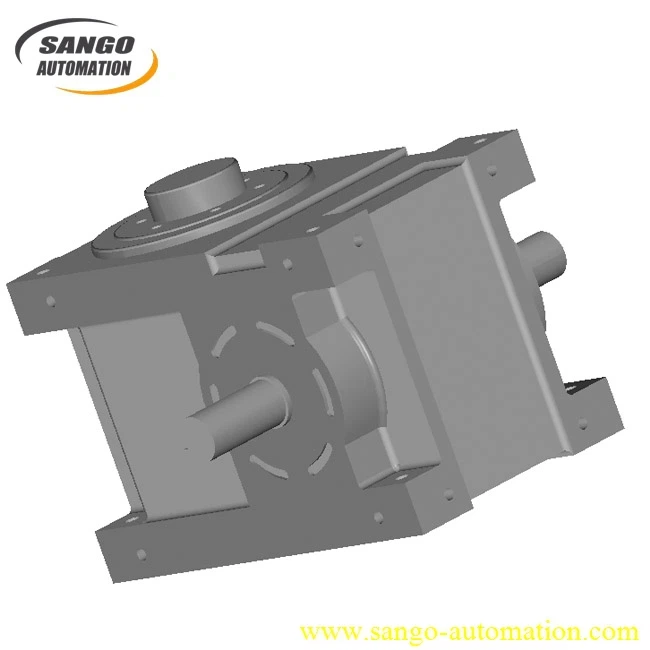
Fixed rotary index table is an intermittent rotary indexing reducer based on cam indexing technology, which belongs to the cam indexer class of reducers. It has the following characteristics.
Fixed indexing angle
The indexing angle of the fixed rotary index table is determined by the profile curve of the cam of its core structure, and the indexing angle is determined by determining the contour curve. Commonly used indexing angles are 45, 60, 90 and 120, and can be customized according to your process needs.
High repeatability accuracy
With a positioning accuracy of up to 15 arc sec, this product is integrated into the equipment to ensure that each product is processed in the same position and ensures consistent product quality.
High rigidity and shock absorption
The Fixed rotary index table uses highly rigid alloy steel to prepare the core components, while the housing is cast from gray cast iron HT250, which is able to absorb vibrations during operation and withstand large radial and axial loads.
Production Process
I believe you are also curious about how the fixed rotary index table is produced, and its production process mainly has six steps, let's understand them one by one.
Customized Design
First, confirm the customer's needs, including the number of stations, indexing angle, load, speed, accuracy, rotation stop time, etc. Based on this data, our engineers perform mechanical calculations to tailor the most suitable cam curve (e.g., corrected sine, trapezoidal, etc.) to optimize dynamic performance and balance speed and shock.
Production Of Core Components
For key components such as globoidal cam, roller gear cam, and turret, alloy steels such as GCr15 and 20CrMnTi are used for CNC machining, and heat treatments such as quenching and tempering and carburizing are used to form a basic contour.
The housing of the fixed rotary index table is made of gray cast iron HT250 produced under the sand casting process and quenched.
Precision Machining
The final shape grinding of the cam line of the heat-treated curved cam is made using a high-precision CNC grinding machine. The raceways of bearing rings are ground using precision internal and external cylindrical grinders, ensuring their profile accuracy and surface finish. The vertical machining center is used to complete the finishing of each datum surface of the index table box to ensure the position accuracy and verticality of the bearing position and mounting surface.
Inspection And Assembly
After completing the cleaning and non-destructive inspection of all parts before assembly to ensure that the parts are fine, the assembly and oil sealing are carried out in the housing, and all parts are in the best fit state by adjusting the meshing gap between the cam and cam roller and the pre-running fit.
Quality Inspection
In order to ensure that the performance and quality of the factory fixed rotary index table meet the requirements, a series of tests are required, including accuracy testing, runout testing, running testing, and tightness testing.
Cleaning, Rust Prevention And Packaging
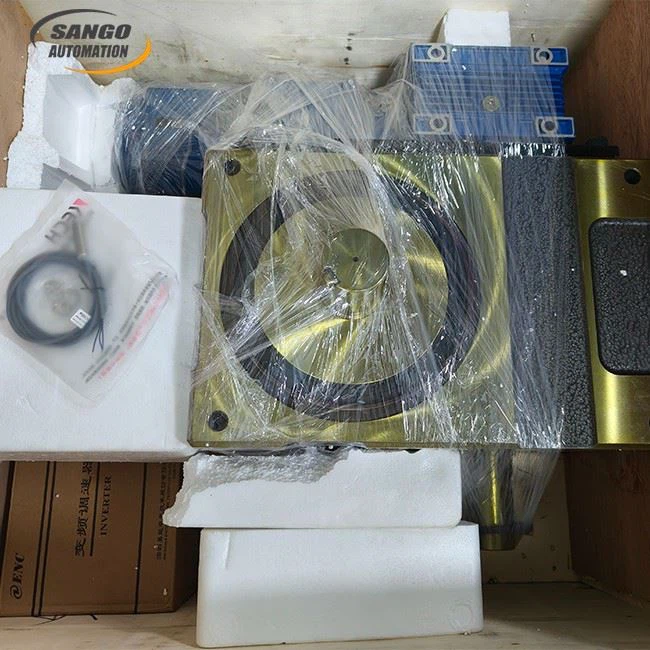
After the final inspection, the products will be thoroughly cleaned, sprayed with anti-rust oil on the processing surface, and finally wrapped in a dust bag and placed in a custom-sized wooden box to ensure that the product will not be damaged during transportation.
Fixed Rotary Index Table VS Flexible Rotary Index Table
|
Contrast Dimensions
|
Fixed Rotary Index Table
|
Flexible Rotary Index Table
|
|
Drive Mode
|
Motor + worm gear/RV reducer or timing belt indirect drive
|
Servo motor + precision reducer integrated drive
|
|
Sports Characteristics
|
Intermittent indexing movement, the movement law is fixed by the cam curve
|
Flexible programmable movement, the indexing angle can be set arbitrarily
|
|
Indexing Angle
|
Fixed, determined by the cam structure, the change requires the replacement of the core components
|
Flexible, can be set and changed within 360 through the controller
|
|
Load Capacity
|
Extremely strong, multi-roller meshing, rigid locking, good impact resistance
|
Light to medium load, load capacity depends on integrated reducer model and motor torque
|
|
Accuracy Retention
|
Excellent, mechanical transmission and locking, precision for life, long life
|
good, but there is a risk of slightly increased backlash when operating under shock loads for a long time
|
|
Suitable For The Scene
|
Multi-station automatic assembly, packaging, capping, stamping synchronization, etc
|
Robot end effectors, laser marking, CNC indexing tables, inspection stations, etc
|
FAQ
If the fixed rotary index table is making abnormal noises in operation, what could be causing it?
The fixed rotary index table usually has several main reasons for abnormal noise during operation: first, insufficient lubrication or incorrect lubricating oil grade; second, internal parts wear due to overload or fatigue; third, the installation foundation is not firm or the horizontality is not up to standard, resulting in slight deformation and deformation of the box; Fourth, the vibration transmitted by the problem of external transmission components (such as timing belts and couplings). It needs to be systematically investigated one by one.
Our existing equipment uses a servo indexing solution, can we replace it with a fixed rotary index table to improve performance?
Absolutely yes, and this is often the result of upgrades that pursue higher speed, higher rigidity, and longer life. When replaced, our engineers assist you in confirming key interface dimensions, load parameters, and indexing angles. Replacing the flexible servo system with a mechanical fixed rotary index table can significantly improve the cycle stability and impact resistance of the equipment under high-speed and heavy load conditions, and reduce long-term maintenance costs.
Fixed rotary index table In addition to high loads, what are the advantages of automated production lines that require continuous operation for a long time?
The advantage of the Fixed rotary index table is that its fully mechanical transmission structure avoids the loss of electronic components, improves the overall service life, and the core components that have been precision-machined and heat-treated wear extremely slowly under oil bath lubrication. It can provide good operational stability.
Engineered for Precision and DurabilityThis rotary index table is constructed with rugged, precision ground cast iron housing, ensuring lasting durability even in the most demanding industrial environments. Its corrosion-resistant paint finish protects against wear and environmental elements, making it ideal for continuous use.
Versatile and Customizable SolutionsCatering to varying operational needs, the table is available in models suitable for 4 to 24 stations with customizable indexing angles. Users can choose from a wide range of electrical, control, and connectivity options, ensuring seamless integration into existing systems or tailored setups.
Efficient and Reliable OperationWith an indexing accuracy of 20 arc seconds, low maintenance requirements, and noise levels below 60 dB, this table guarantees dependable results and operator comfort. Sealed-for-life bearings and flexible mounting methods further enhance ease-of-use and performance stability.
FAQ's of Fixed Rotary Index Table:
Q: How does the fixed rotary index table ensure high positioning accuracy?
A: This table features fixed indexing angles with precision indexing accuracy of 20 arc seconds, achieved through quality materials and advanced engineering. The rugged cast iron construction and precision ground surfaces reduce errors, making it highly reliable for critical operations.
Q: What customization options are available for the rotary index table?
A: Customization is available on request for table diameter, number of stations, indexing angle, control types (PLC/manual), cable length, IP rating (IP54/IP65), and mounting style. These options cater to diverse industry needs and integration requirements.
Q: When should you consider using a fixed rotary index table in your workflow?
A: You should use a rotary index table for repetitive positioning tasks requiring high accuracy and productivity, such as assembly, machining, inspection, or packaging, particularly when consistent fixed-angle movement between multiple stations is essential.
Q: Where can this rotary index table be installed and what are the mounting options?
A: The rotary index table is designed for floor or platform mounting, allowing flexible installation in factories or workshops. Its corrosion-resistant finish and IP54/IP65 ratings make it suitable for a variety of industrial environments.
Q: What power specifications and electrical requirements does the table support?
A: The table operates on 220 Volt power, compatible with both single and three-phase supply, and is designed to work at frequencies of 50/60 Hz. Standard electric connectors and optional remote control facilitate easy and safe electrical integration.
Q: How does the sealed-for-life lubrication benefit users?
A: Sealed-for-life bearings/grease lubrication eliminate the need for periodic lubricant checks or replacement, significantly reducing maintenance downtime and extending the operational life of the rotary index table.
Q: What are the advantages of using this rotary index table for industrial applications?
A: Key benefits include high-precision indexing, low maintenance, compact and durable design, quiet operation, broad customization, and swift integration with automation systems, all contributing to improved productivity and operational reliability.

 Guangdong, China
 Send Email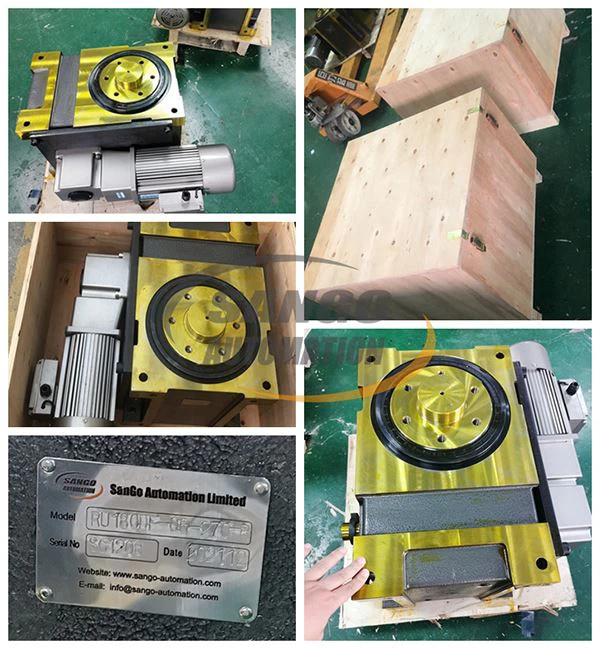

 Send Inquiry



 Send Inquiry


 English
 Spanish
 French
 German
 Italian
 Chinese (Simplified)
 Japanese
 Korean
 Arabic
 Portuguese