Stainless Steel Casting Parts About
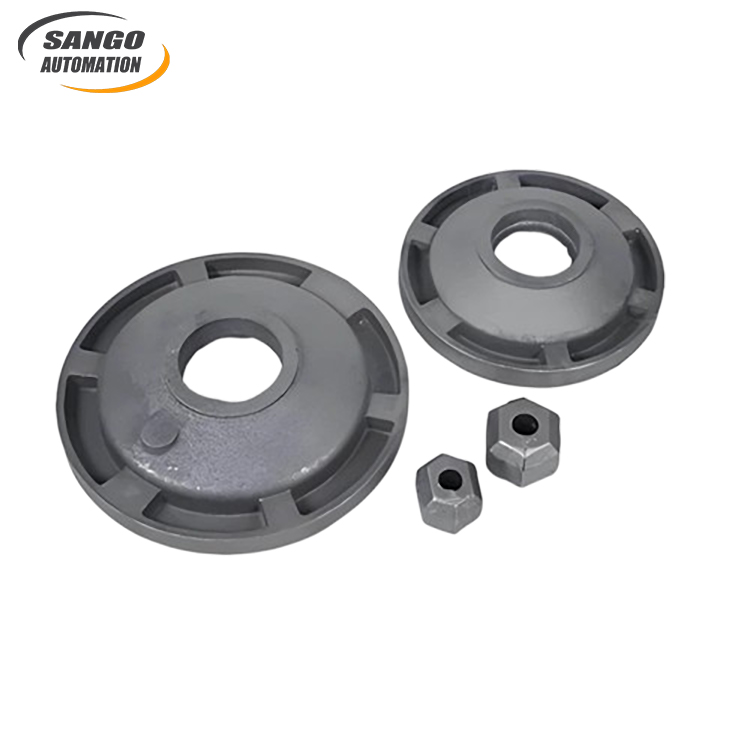
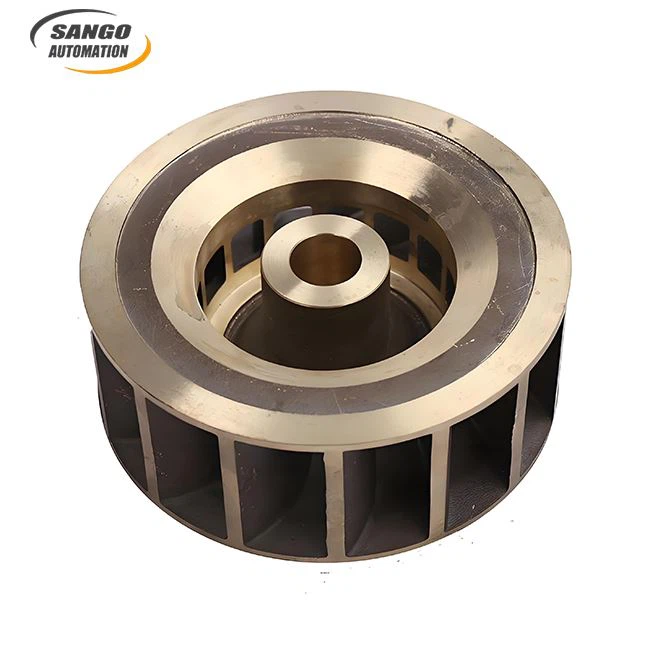
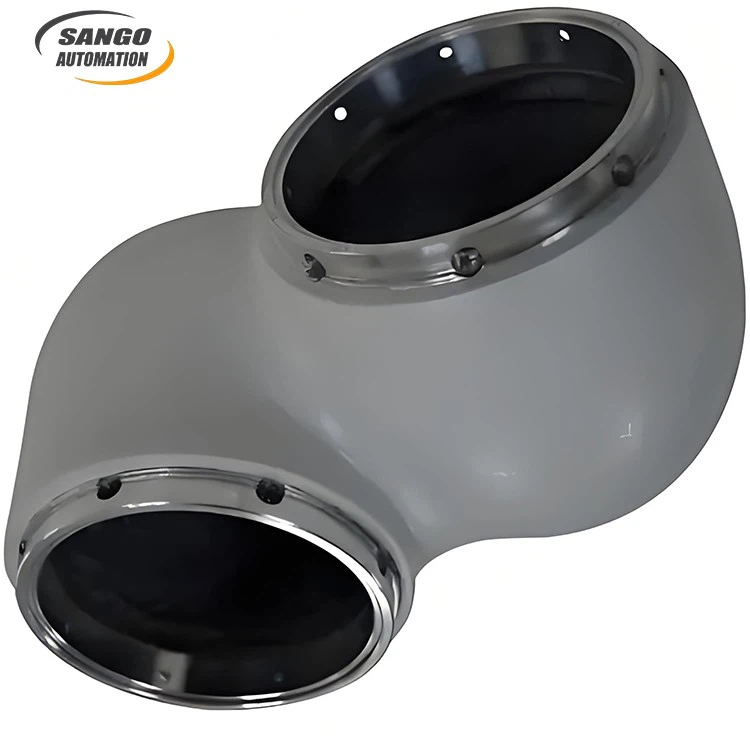
Sango Automaton is a foundry factory that can provide one-stop services for casting blank manufacturing and precision casting processing, and can provide customers with customized stainless steel casting parts, casting iron parts and other products.
Since its establishment in 2010, Sango has been providing equipment parts casting services for equipment manufacturers in the field of food packaging machinery, and we have rich experience in the production of stainless steel casting parts, and the materials commonly used are CF-8M (stainless steel 316), CF-3 (stainless steel 304L), etc.
Product Properties
Excellent corrosion resistance
Stainless steel materials contain chromium (Cr), which can form a dense oxide film on the surface of the casting, which is chemically stable and self-healing, and can isolate the contact between the matrix and corrosive materials, so stainless steel casting parts have good corrosion resistance.
Good mechanical properties
Stainless Steel Casting Parts have high strength, high hardness, good fatigue resistance, and higher tensile strength, yield strength, and toughness than gray iron, which makes them widely used under high loads and certain impact stresses.
Good ease of cleaning
The surface of the stainless steel casting part is smooth and dense, resistant to bacteria and dirt, and easy to clean and sterilize. This inherent easy-to-clean property allows it to be widely used in food processing, pharmaceutical, medical, and other fields.
Material Grades
The material grades we generally use in the production of stainless steel casting parts include CF-8M, CF-3, CF-3M, etc. Below I will briefly compare the direct differences between these three types of materials.
|
Dimension
|
CF-8M
|
CF-3
|
CF-3M
|
|
Corresponding Forging Grade
|
316
|
304L
|
316L
|
|
Ingredients
|
Carbon content 0.08%
Molybdenum content: 2.0-3.0%
|
Carbon content 0.03%
Molybdenum-free
|
Carbon content 0.03%
Molybdenum content: 2.0-3.0%
|
|
Corrosion Resistance
|
Good corrosion resistance and resistance to chloride pitting
|
Good acid and alkali resistance, but not chloride corrosion
|
Corrosion resistance is better than CF-8M
|
|
Welding Performance
|
After welding, solution treatment is required to restore optimal corrosion resistance
|
No heat treatment is required after welding, and the resistance to intergranular corrosion is strong
|
No heat treatment is required after welding, and the resistance to intergranular corrosion is extremely strong
|
|
Main Applications:
|
General chemical pump valves, impellers, etc
|
Food processing equipment, brewing equipment, containers for weakly corrosive environments, etc
|
Complex components such as high-end chemical pipelines that cannot be heat treated after welding
|
In addition, we can also produce Duplex Stainless Steel and Martensitic Stainless Steel series castings according to customer needs, please consult our engineers for more information.
Production Process of Casting Stainless Steel
Pattern Making
According to the drawings provided by the customer, a pattern similar to the shape of the final part is prepared, which needs to reserve a certain machining allowance, shrinkage allowance and draft angle to ensure that after subsequent processing, the casting can meet the specifications of the final part.
Core Making (optional)
This step is only available for stainless steel casting parts with inner cavities, using a special core sand to make a sand core that forms the inner cavity of the casting, and spraying a refractory coating on the surface of the sand core.
Molding
The process of molding is generally divided into two parts. The first is to prepare the upper and lower two molds, put the COPE part of the pattern into the lower sand box, fill the sand ramming to prepare the drag, and then put the drag part of the pattern into the upper sand box for ramming and make the gating system and riser to prepare the COPE. Then take out the pattern and spray the mold coating on the upper and lower mold surfaces, put the sand core into the drag if you need a sand core, then merge the cope and drag, align the dowel pin and lock it. Form a cavity in the mold that is the same shape as the part.
Pouring
Once the molding is complete, molten metal can be slowly injected into the gating system. After the injection is complete, wait for cooling and solidification.
Shakeout and Cleaning
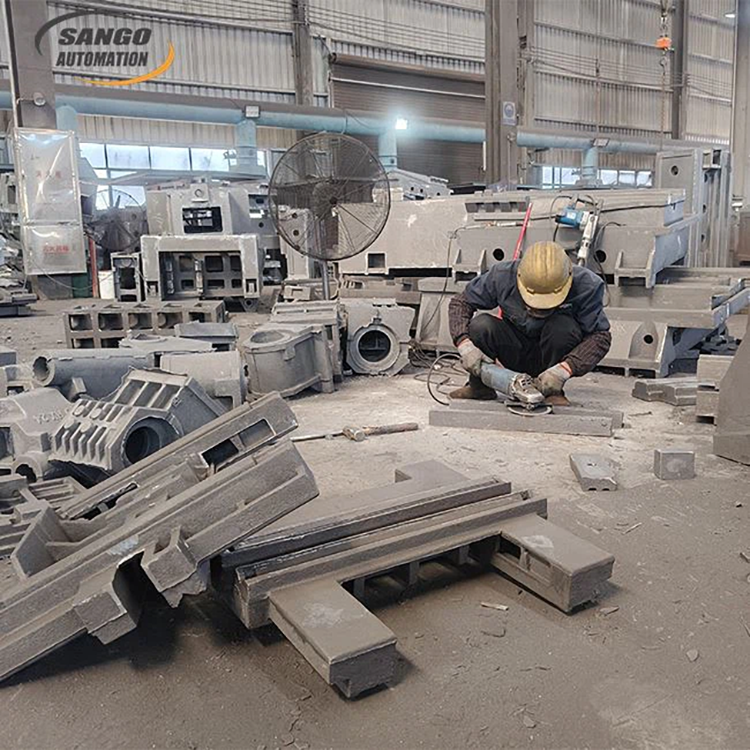
After the metal solidifies, it enters the process of shakeout, which separates the casting from the mold by vibration. Subsequently, cleaning is carried out by vibration, shot blasting, cutting, etc., to remove the molding sand and core sand adhering to the casting surface.
Heat Treatment
The casting is then heat treated to eliminate residual stress and restore the stainless steel casting parts to their optimal corrosion resistance and toughness.
Pickling and Passivation
After the heat treatment is completed, it is necessary to use a mixture of nitric acid and hydrofluoric acid for pickling, and then use nitric acid for passivation to remove the scale formed on the casting surface during the heat treatment process, and re-form a dense passive film on the surface.
Precision Machining
After completing all the above processes, the final step is precision machining, machining the casting surface with precision machining requirements to achieve the dimension and tolerance required by the drawing.
This concludes the entire production process for stainless steel casting parts.
Reliable Stainless Steel Casting SolutionsEngineered for durability and precision, our stainless steel casting parts meet stringent quality standards. Whether you need components for complex machinery or basic industrial fittings, our range ensures consistent results. As an established name in India, we support both domestic and international markets with prompt supply and unwavering quality assurance.
Trusted by Industries WorldwideOver the years, we've become a preferred choice across numerous sectors due to our unwavering commitment to quality and integrity. Our stainless steel casting parts help streamline operations, optimize performance, and reduce maintenance costs. With our vast network and efficient supply chain, we deliver prompt services to clients across the globe.
FAQ's of Stainless Steel Casting Parts:
Q: How are your stainless steel casting parts manufactured?
A: Our stainless steel casting parts are produced using precise casting techniques supervised by expert engineers. Each part is crafted with high-quality stainless steel, ensuring consistency and meeting rigorous quality standards throughout the manufacturing process.
Q: What industries commonly use these stainless steel casting parts?
A: These casting parts are widely utilized in industries such as automotive, construction, agricultural machinery, chemical processing, and engineering, owing to their strength, corrosion resistance, and versatility.
Q: When can customers expect delivery after placing an order?
A: Delivery timelines depend on order quantity and location, but as an established manufacturer and exporter based in India, we strive to dispatch standard orders promptly. Our team provides estimated delivery dates upon order confirmation.
Q: Where are your stainless steel casting parts exported from?
A: All products are manufactured and shipped from our facilities in India, catering to clients both within the country and internationally through our extensive distribution network.
Q: What is the process for purchasing stainless steel casting parts from you?
A: Customers can reach out to us directly as a supplier or trader for product inquiries. After confirming specifications and order requirements, we provide quotations, lead times, and arrange for secure shipment upon order finalization.
Q: How can stainless steel casting parts benefit my business operations?
A: Our stainless steel casting parts offer enhanced longevity, resistance to corrosion, and consistent performance, reducing downtime and the need for frequent replacements in your machinery or applications.
Q: What kind of after-sales support and warranty do you offer?
A: We provide a one-year warranty on all our stainless steel casting parts. Our support team is available to assist with queries, and we address any manufacturing-related issues swiftly under the warranty terms.

 Guangdong, China
 Send Email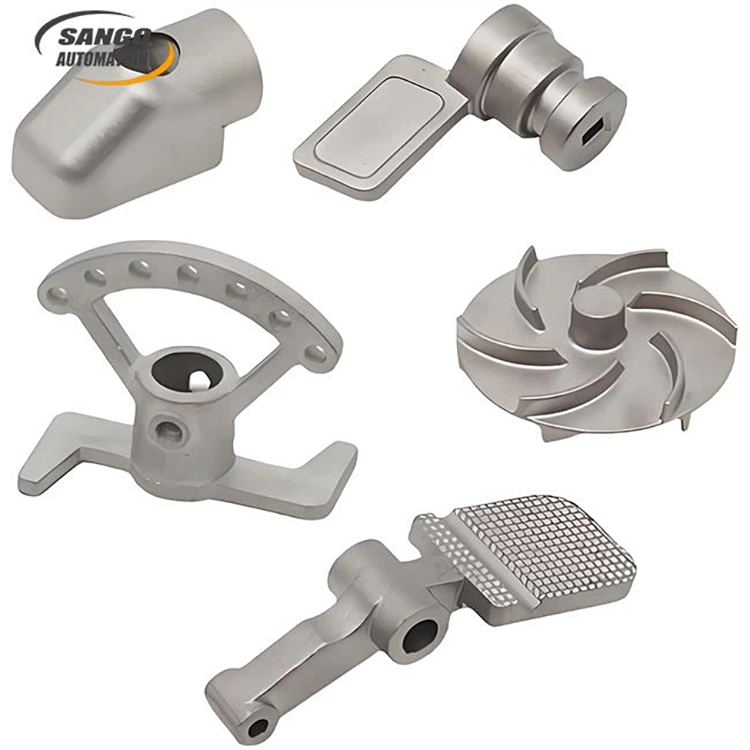

 Send Inquiry



 Send Inquiry


 English
 Spanish
 French
 German
 Italian
 Chinese (Simplified)
 Japanese
 Korean
 Arabic
 Portuguese